




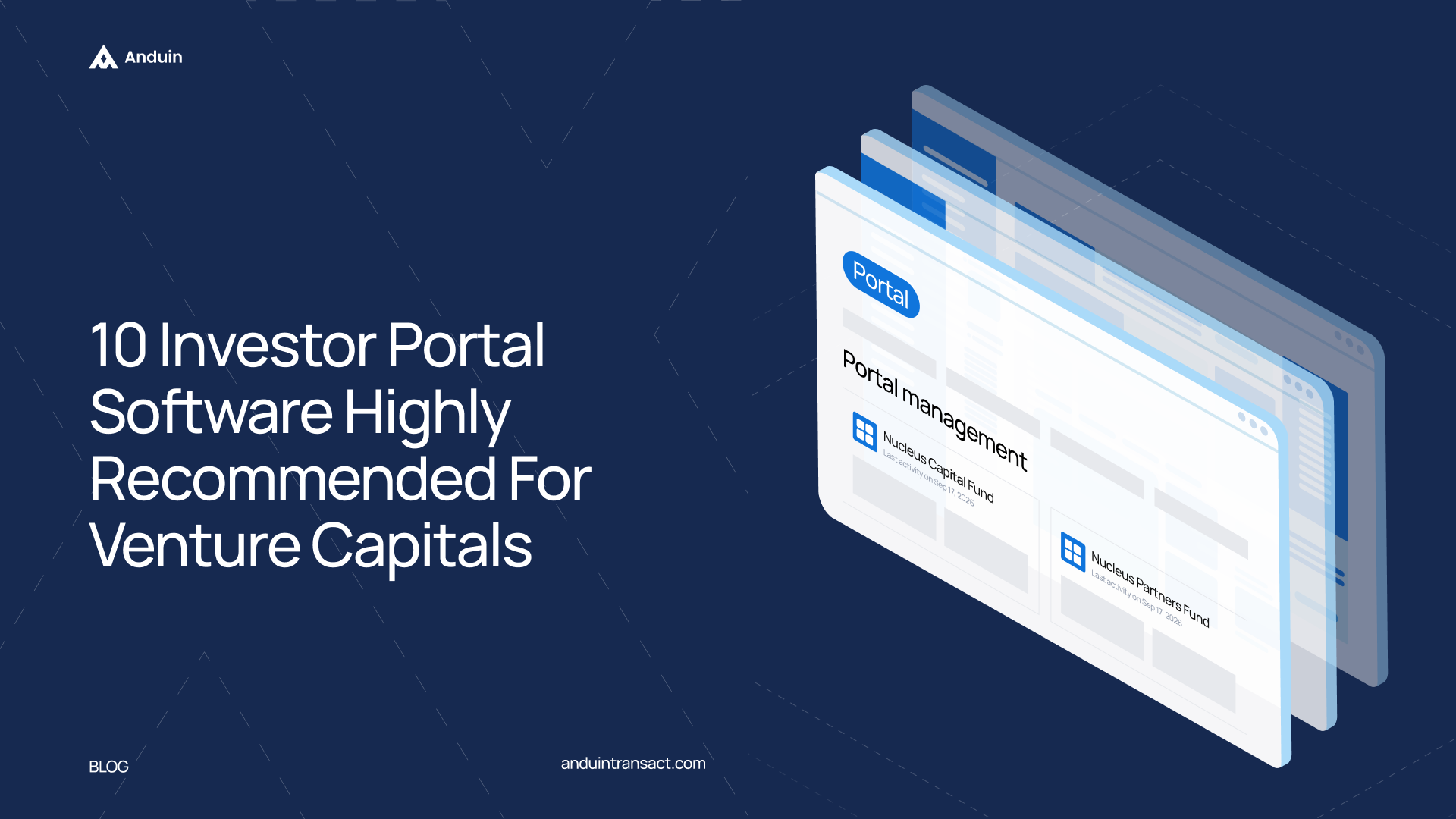
Throughout a fund's life, LPs need a single, secure place to check on their investments: viewing capital account balances, downloading statements and tax documents, tracking capital calls and distributions, and accessing the latest reporting. An investor portal is that place, a branded, permissioned space where each LP logs in to find exactly what is meant for them.
A good investor portal gives LPs self-service access to their own data while giving GPs a professional, on-brand way to share documents and performance, cutting down on the back-and-forth email that usually fills the gap.
There are many options on the market currently, and pricing usually depends on the number of LPs and funds, user counts, features, AI tools, integrations, and how much hands-on service you need.
Criteria To Choosing An Investor Portal Software
A good investor portal should support the following features:
- A secure, branded LP login that reflects your fund's identity
- Granular, role-based permissions (fund, LP, and user-level access)
- Self-service access to capital account balances and statements
- Document storage and sharing (LPAs, K-1s, notices, reports)
- Capital call and distribution notices delivered through the portal
- Investor activity tracking (document views, downloads, logins)
- Strong encryption, authentication, and audit logging
- Mobile-friendly access for investors on the go
10 Investor Relations Software Trusted by Global Investors
1. Anduin Transact
Anduin is an investor relations platform built for fund managers who want to run the entire LP relationship in one branded place. Most IR tools handle a single slice, with a portal, a mailing list, and onboarding bolted on. Anduin pulls it together, so from the first time an LP sees your fund to the updates you send years later, the whole relationship lives on one system.
That matters for IR because the LP experience is the relationship. When investors onboard through a clean, branded flow, get a single place to find their documents, and hear from you through a channel you control, every touchpoint reinforces trust. When it is scattered across email threads and generic tools, it quietly works against you.
What you can do with Anduin:
You manage and nurture the whole LP relationship from one platform, from first contact through every raise that follows. You can:
- Onboard investors through guided, branded flows, and let returning LPs pre-fill from past data instead of starting over
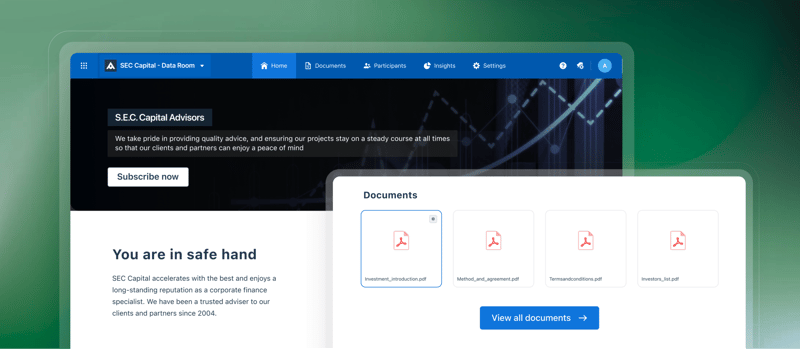
- Give each LP a private, permissioned space where they see exactly the funds, documents, and updates meant for them
- Communicate directly through the platform with announcements and updates, instead of unsecured, untracked email threads
- Track investor activity, with engagement signals, activity logs, and version history that show you who is paying attention and when
- Keep your CRM in sync so investor data flows where you need it, with the audit trail handled automatically
Why Anduin stands out:
- One relationship surface, not one moment. Most IR tools cover onboarding, or a portal, or updates. Anduin spans the first touchpoint, subscription, ongoing communication, and your next raise, so your investor data and relationship history carry forward with no re-entry.
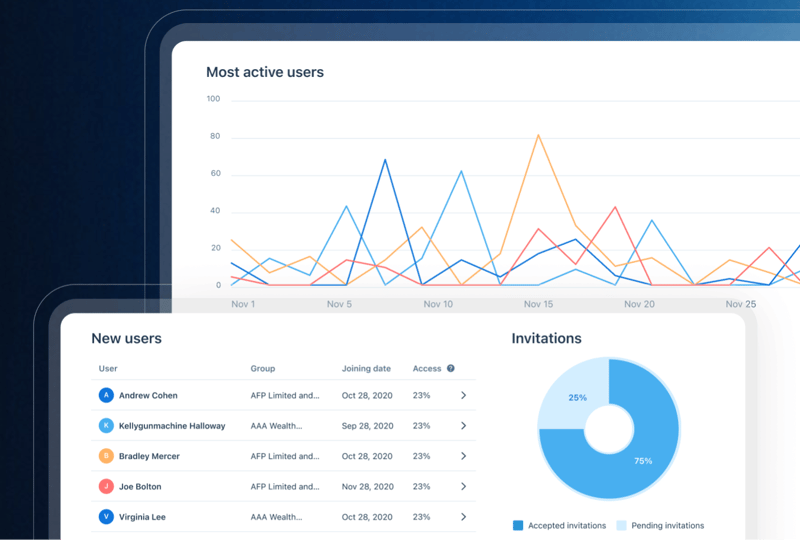
- A branded investor experience you own. Your LPs get a private, invite-only space with your brand, your updates, and your communications, instead of a generic portal or a public website. The experience reflects your firm, not your vendor.
- Investor self-service without losing control. LPs onboard, update their details, and find what they need themselves through guided flows, so routine requests stop landing in your inbox. You keep full visibility into every interaction without managing each one by hand.
- Built for how alternatives actually work. It handles complex structures like VC funds, funds-of-funds, SPVs, and feeders, supports AES and QES e-signatures made for alternatives, and connects to your CRM and tools like Slack and Outlook so investor activity reaches your team where they already work.

2. Juniper Square
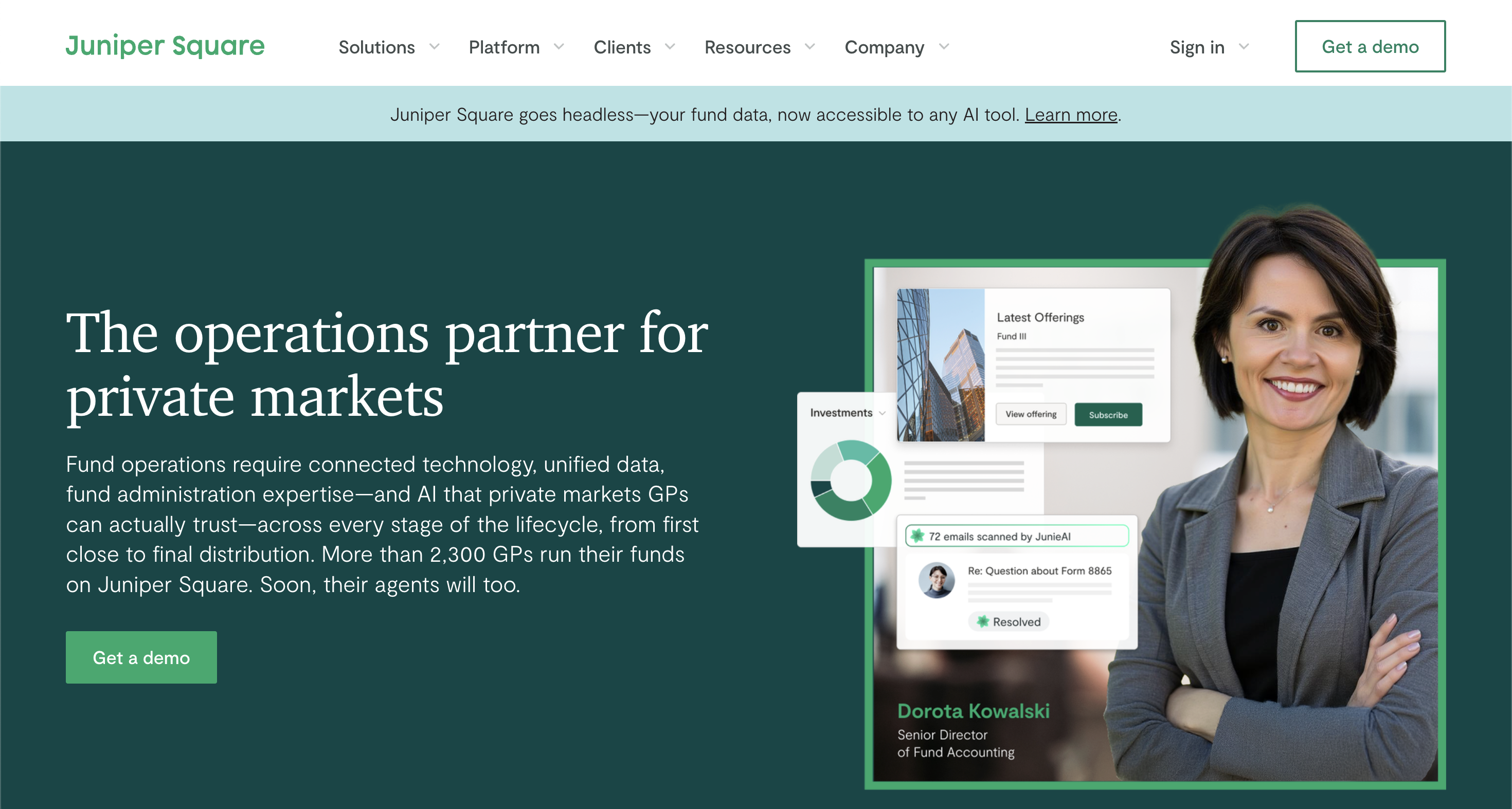
Juniper Square runs one of the most widely used investor portals in private markets, built into a fuller platform with fund administration and an IR CRM. For your LPs, the portal is the front door, a branded, secure place to see their statements, documents, and performance whenever they want.
- What you can do with Juniper Square: Your LPs get a branded portal where they can view statements, documents, K-1s, and performance in real time, without emailing your team for updates. On your side, you run fundraising, onboarding, capital calls, distributions, and reporting from the same platform that powers the portal, so what investors see stays in sync with your back office.
- Why Juniper Square stands out: The portal is the core of the product, not a bolt-on, and it is one of the most widely used in the space, with more than 650,000 LP accounts and over $1 trillion in capital on it. It pairs the software with an optional fund-administration service, so your IR, finance, and admin teams all work off the same data, and recent AI features (an IR-focused CRM, the Sightglass acquisition for DDQ automation, and a layer connecting fund data to tools like ChatGPT and Claude) keep extending it.
- It's best for: Real estate and private markets GPs who want a polished, widely trusted LP portal backed by a full investor management and administration platform.
- Pricing: Custom pricing based on your fund structures, services, and scale. You can get a quote through a demo.
Website: Juniper Square
3. Carta
Carta is best known for cap table management, but for funds it also includes an LP portal built on top of its fund administration. For your investors, that portal ties what they see, like capital accounts, documents, and K-1s, to the ownership data Carta already tracks across much of the startup ecosystem.
- What you can do with Carta: Your LPs log into a portal where they can view their capital account balances, fund documents, K-1s, and capital call history in one place. On your side, you handle onboarding, capital calls, distributions, and reporting in the same system, and because Carta is the standard for startup cap tables, the portal connects to the underlying ownership data.
- Why Carta stands out: Its edge is the link between the LP portal and cap table data. If you are a VC invested in startups already on Carta, your investors get reporting tied to real, underlying ownership and exposure, all inside one connected ecosystem of companies, funds, and investors.
- It's best for: VC and PE firms, especially those already in the Carta ecosystem, that want an LP portal connected to fund administration and cap table data. Note that the portal is one part of a broader platform and can feel equity-first for complex or offshore structures.
- Pricing: Custom pricing that varies by modules, fund type, and scale, with some services like K-1 preparation added on top of the base fee. You can get a quote through a demo.
Website: Carta
4. Allvue Systems
Allvue Systems is an enterprise platform for alternative-asset managers, and its investor portal is the LP-facing layer that sits on top of its fund accounting. Instead of emailing statements and notices one by one, you give your investors a single secure, branded place to find everything.
- What you can do with Allvue: Your LPs get a branded portal to access reports, capital account statements, K-1s, and capital call notices online, and they can securely manage their own banking, FATCA, and contact details. The portal tracks investor activity, like which documents they view and what they request, and because it sits over Allvue's fund accounting, the numbers your investors see come straight from your books.
- Why Allvue stands out: Its strength is that the portal is backed by a full, institutional-grade accounting and portfolio platform, so there is no gap between your back office and what your LPs see. It is trusted across tens of thousands of funds with more than $500 billion in assets on the platform, and it is especially strong for private credit and direct-lending managers.
- It's best for: Mid-to-large managers across private equity, private credit, venture capital, and real estate who want an LP portal built into a complete, institutional-grade operations platform rather than a standalone tool.
- Pricing: Custom, quote-based pricing scaled to your firm size, asset classes, and modules. There is no public price list or free trial, but you can get a quote through a demo.
Website: Allvue Systems
5. Dynamo Software
Dynamo Software is a configurable platform for alternative-asset firms, and its investor portal is a highly customizable, branded space for your LPs. It connects to Dynamo's CRM and reporting, so the portal reflects the same investor data your team works from.
- What you can do with Dynamo: Your LPs get a branded portal for real-time access to statements, capital calls, distributions, and tax documents, with a dedicated Tax Center for K-1s. They can manage their own profiles and find documents without emailing you, and the portal tracks their activity. On your side, it ties into Dynamo's CRM and automated reporting on metrics like IRR and TVPI.
- Why Dynamo stands out: The portal is highly configurable and carries your branding, and it serves both sides of the table, supporting GPs sharing with LPs and institutional allocators monitoring their own portfolios. The tradeoff is that it takes some setup to configure it the way you want.
- It's best for: Established firms and institutional investors who want a deeply configurable, branded investor portal connected to a broader CRM and reporting system, and are willing to invest in implementation.
- Pricing: Custom, quote-based pricing scaled to your firm size, modules, and asset classes. You can get a quote through a demo.
Website: Dynamo Software
6. InvestorFlow
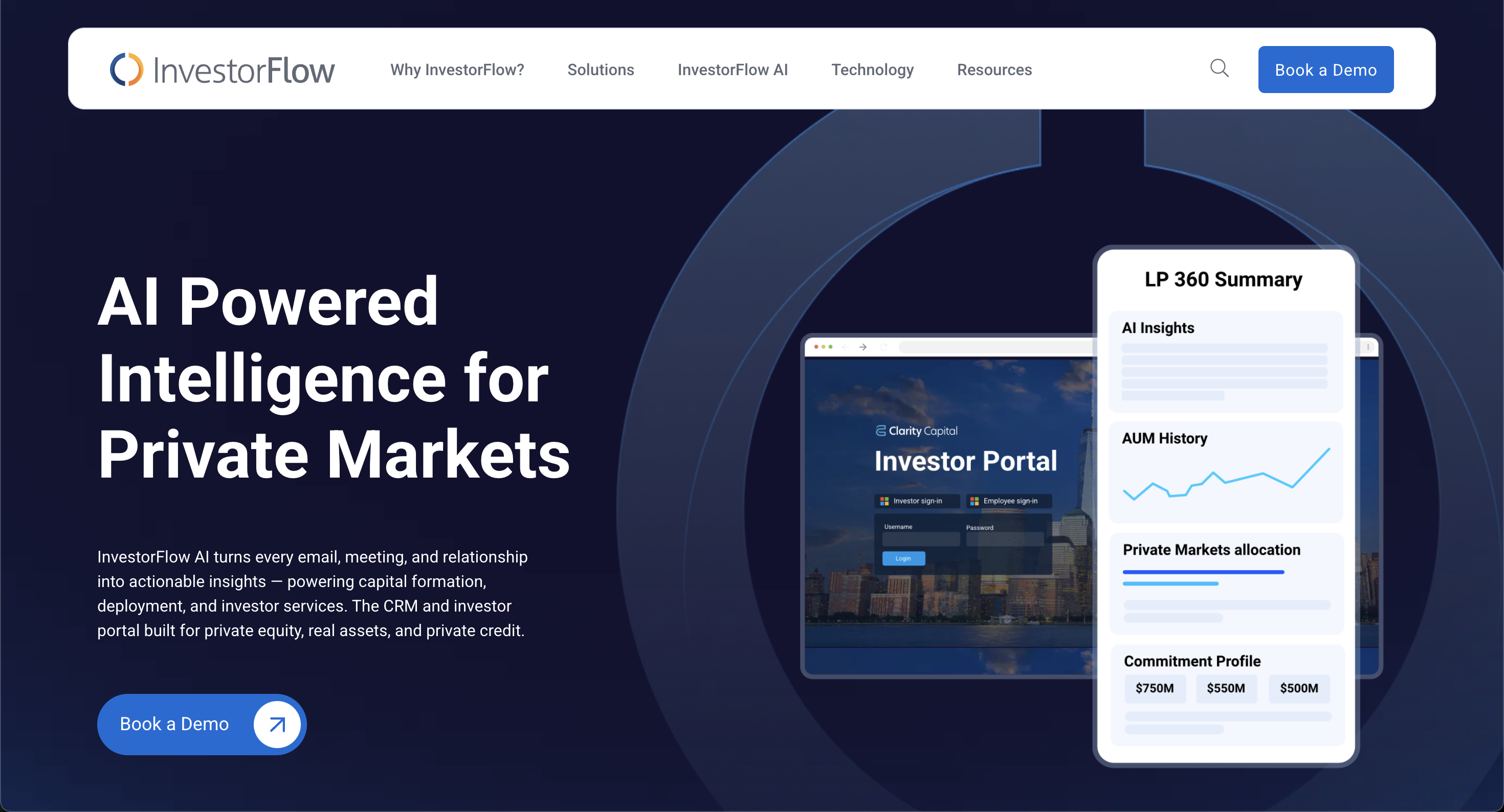
InvestorFlow is built natively on Salesforce, and its investor portals are a core part of the offering. If your firm already runs on Salesforce, you get LP-facing portals and reporting that connect directly to your CRM data.
- What you can do with InvestorFlow: You give your LPs a configurable portal for reporting, documents, and communications, with aggregated and investor-specific performance reporting and personalized alerts. The portal connects in real time to the Salesforce CRM behind it, so permissions and data flow between the two, and there is an Enterprise Portal with API access for large firms that need to integrate other systems.
- Why InvestorFlow stands out: The portal sits on Salesforce, so you get enterprise-grade security and the wider Salesforce ecosystem, plus portal configurations built specifically for private markets. It is made for scale, serving more than 150 clients (including a large share of the top alternative asset managers) with tens of thousands of LPs on the platform.
- It's best for: Mid-size to enterprise firms, especially those already committed to Salesforce, that need configurable, high-touch investor portals.
- Pricing: Custom, quote-based pricing tied to your modules, portal needs, and scale. You can get a quote through a demo.
Website: InvestorFlow
7. Altvia
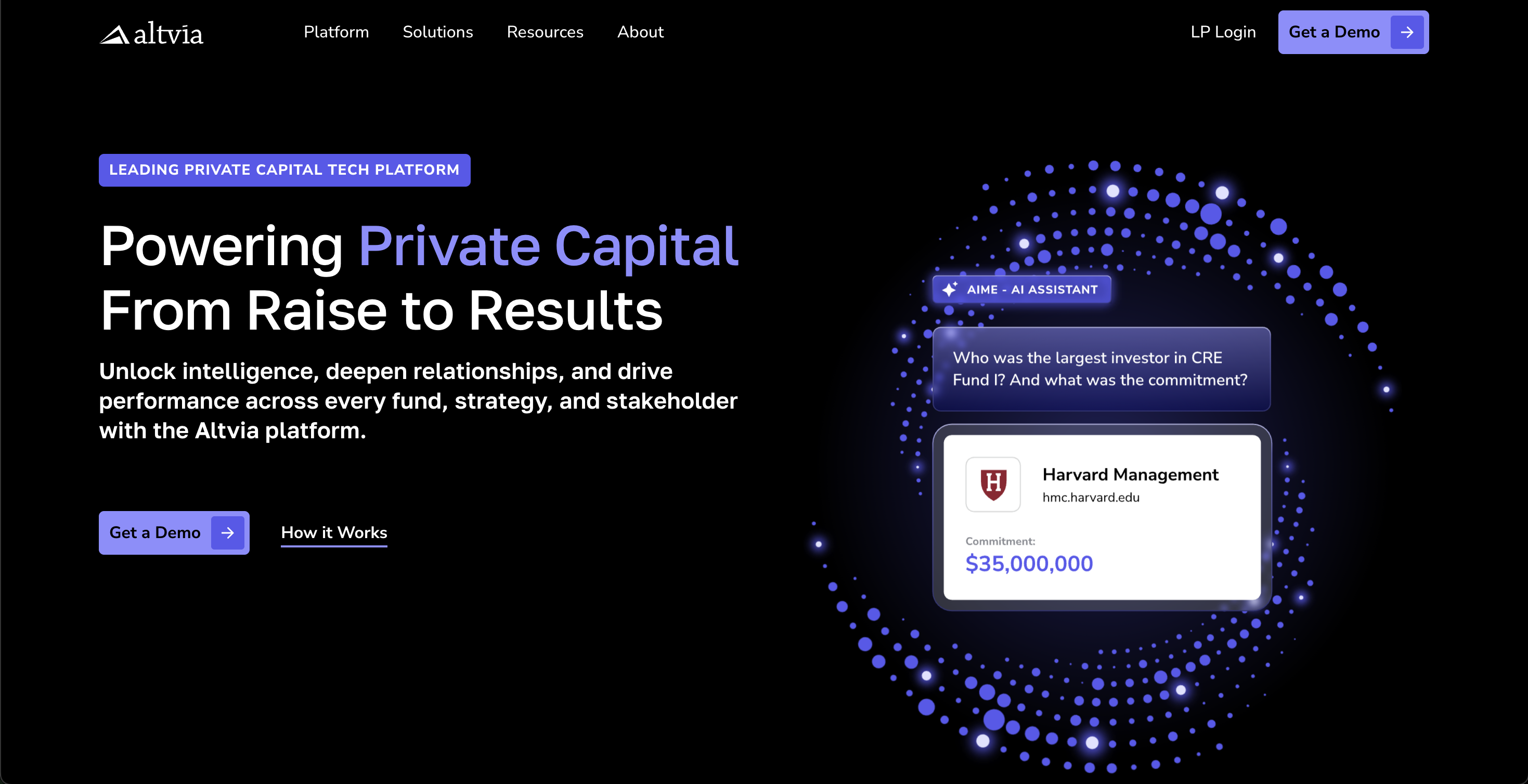
Altvia is a Salesforce-based platform for private capital, and its LP portal gives your investors a secure place to access communications and documents, connected to the AIM CRM your team uses for relationships and fundraising.
- What you can do with Altvia: Your LPs get a secure portal for documents and communications, while your team manages the relationship and fundraising side in the AIM CRM. Investor data, documents, and interactions stay in one connected system, its AI assistant (AIMe) captures calls and emails behind the scenes, and it connects to onboarding through an integration with Passthrough.
- Why Altvia stands out: Built on Salesforce, it pairs an LP portal with private-markets CRM workflows plus the wider Salesforce AppExchange ecosystem, without a heavy custom build. It supports more than 40,000 LP investors across hundreds of firms, and a 2022 majority investment from Marlin Equity Partners signals real backing behind it.
- It's best for: Private equity and venture capital firms already on Salesforce, or open to it, that want an LP portal tied to their CRM and fundraising.
- Pricing: Custom pricing by modules and scale, with third-party listings citing a starting point around $1,800 per year. You can get a quote through a demo.
Website: Altvia
8. eFront
eFront, now part of BlackRock, is an enterprise platform for complex private-capital operations, and its investor portal is the LP-facing layer for institutional managers. It is built for depth, delivering the kind of reporting large LPs and regulators expect.
- What you can do with eFront: You deliver LP-facing reporting and communications through the portal, backed by eFront's fund administration, accounting, and portfolio monitoring. It is built to handle complex fund structures and detailed performance and exposure analytics, and it plugs into the wider BlackRock and Aladdin data ecosystem.
- Why eFront stands out: Its strength is institutional-grade depth and configurability, which makes its portal a familiar benchmark for enterprise LP reporting. Backing from BlackRock gives it scale, security, and a data ecosystem few competitors can match.
- It's best for: Large, established managers and institutional allocators who need a deeply configurable, enterprise investor portal rather than a lightweight tool.
- Pricing: Custom, enterprise quote-based pricing tied to your scale, modules, and structure. You can get a quote through BlackRock or eFront sales.
Website: eFront
9. AngelList
AngelList is fund infrastructure built primarily for venture capital, and it gives your LPs a branded portal as part of its back-office. Each investor logs into their own dashboard to track their position, while you run the fund from a single GP dashboard.
- What you can do with AngelList: Your LPs get their own dashboard to view fund performance, access K-1s and tax documents, and see their capital call and contribution history. On your side, you market the fund through a branded data room with personalized LP access links and engagement tracking, initiate capital calls, track contributions, monitor fund-level metrics like DPI, TVPI, and IRR, and deliver accountant-verified statements straight to investors.
- Why AngelList stands out: Speed and simplicity. A solo GP can stand up a fund and have the LP portal and back-office running the same week, with no third-party integrations required, and the platform supports a large base of funds, syndicates, and active investors. Its design is built around modern VC vehicles like venture funds, rolling funds, SPVs, and scout funds.
- It's best for: Emerging VC managers and syndicate leads who want a branded LP portal and back-office stood up fast. Note that its design is VC- and syndicate-centric, so it is less suited to complex PE or offshore structures.
- Pricing: Custom pricing based on vehicle type and assets. You can get a quote through a demo or sign-up.
Website: AngelList
10. Visible.vc
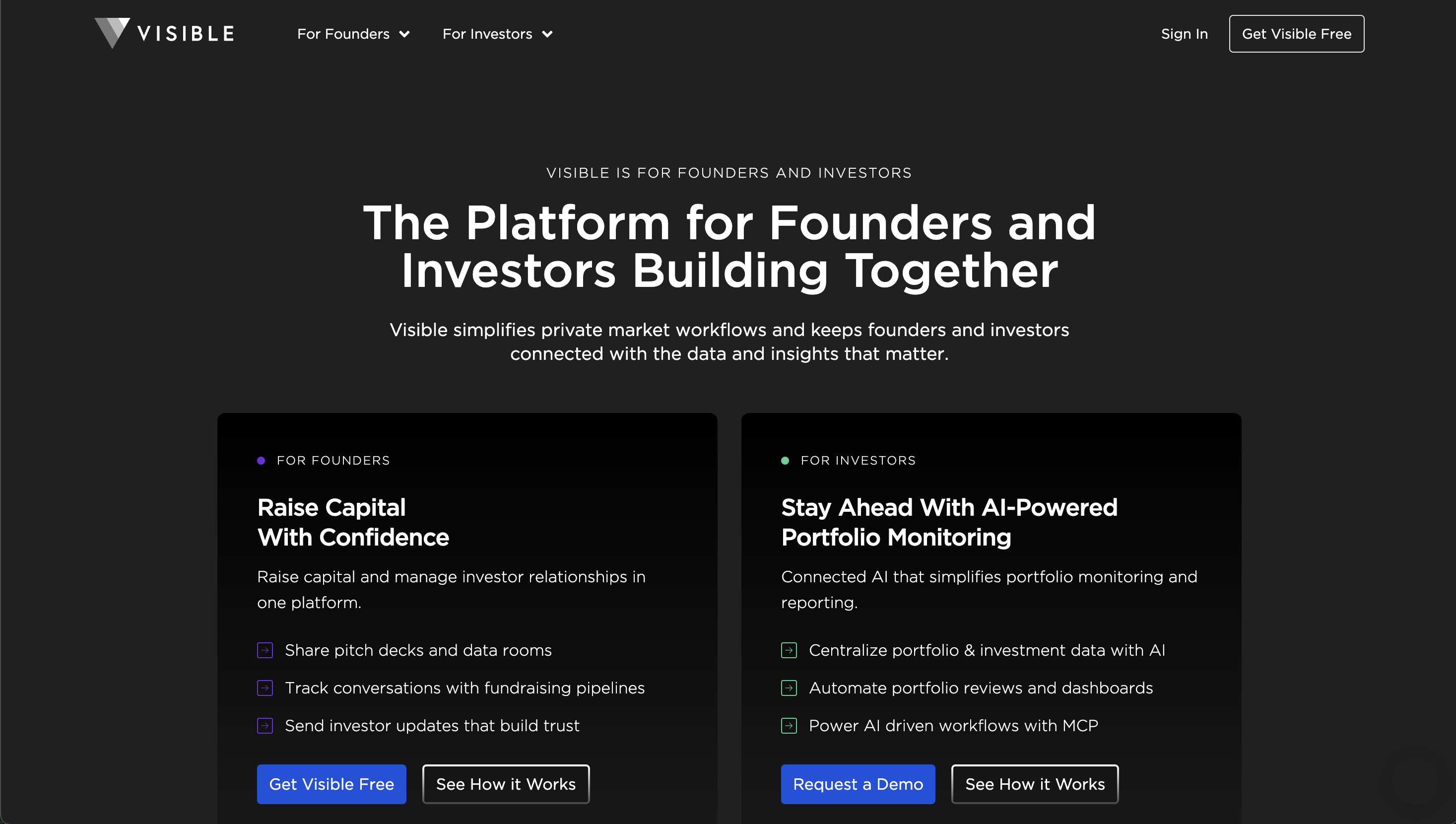
Visible.vc is a lightweight, communication-first platform, and for VC funds its LP-facing reporting acts as a clean, simple investor portal. Instead of a heavy login experience, it focuses on getting polished updates and reports in front of your investors with minimal friction.
- What you can do with Visible: You share fund performance dashboards and auto-generated LP tear sheets, and deliver them by link, PDF, or email so investors always have the latest view. You send polished investor updates that land as real emails with open and click tracking, share documents through secure data rooms with access logs, and handle DDQ and governance reporting, all connected to tools like Salesforce, HubSpot, Stripe, and QuickBooks.
- Why Visible stands out: Its strength is clean, low-friction reporting and communication. More than 540 VC funds use it for portfolio monitoring and LP reporting, and GPs consistently praise how easy it makes a tear sheet or a monthly update. It is lighter and faster to adopt than a full fund-admin portal, and newer AI features parse portfolio data from emails and files to keep your dashboards current.
- It's best for: VC funds and emerging managers who want a simple, polished way to deliver LP reporting and updates, without the weight of an enterprise portal. Note that it is a reporting and communications tool, so pair it with a fund administrator for accounting and capital activity.
- Pricing: A free Starter plan is available, with founder-facing paid plans starting at $59/month billed annually. LP reporting and portfolio monitoring plans for VC funds are custom-priced. You can get a quote through a demo.
Website: Visible.vc
%20(1).png)
