
Share:



In the rapidly evolving landscape of private markets, a subtle yet significant shift is occurring. For years, the industry’s primary focus was on the "front office"—the art of the deal, the cultivation of LP relationships, and the drive to maximize investment returns. However, under the immense weight of the industry's rapid growth, a structural crack has begun to appear in the foundation.
The reality of today’s fund operations often starkly contrasts with the sophisticated investment strategies they support. While a GP might use cutting-edge data science to source a deal, the subsequent investor onboarding and lifecycle management often descend into a chaotic combination of static PDFs, fragmented spreadsheets, and endless email chains. This operational friction was manageable when fund cycles were slower and the investor pool was smaller. But as private markets see increasing participation from retail investors and heightened regulatory scrutiny, the “infrastructure gap” is becoming an invisible risk that threatens to cap a firm’s growth.
The Hidden Cost of Fragmented Data in Fund Operations
The most immediate symptom of this gap is the lack of a single source of truth. In many firms, investor data is not a unified asset; it is a scattered collection of "snapshots" frozen in time. Legal has one version of an entity’s structure in a subscription booklet; IR has another contact list in the CRM; and Compliance holds a third set of documents in a secure folder for KYC/AML. When an LP asks a simple question or a new fund launches, the internal scramble begins.
This fragmentation leads to a dangerous normalization of chaos. Operations teams often accept manual reconciliation as a "part of the job," yet the second-order consequences are severe. Every manual data entry is an opportunity for error, and every conflicting record is a compliance risk waiting to be audited. Beyond the risk, there is the issue of continuity. When a firm cannot easily look across Fund II, III, and IV to see a holistic view of an investor’s history, documents, and preferences, the investor experience suffers. LPs are forced to provide the same information repeatedly, leading to "subscription fatigue" that can tarnish a firm’s brand.
Why The Pressure Is Accelerating To Have A Single Source Of Truth For Investor Data
The tolerance for this operational friction is dropping, driven by three powerful market forces:
-
The Democratization of Private Markets: As firms move beyond traditional institutional investors toward high-net-worth individuals and retail investors, a segment projected by Bain & Company in their 2024 Global Private Equity Report to grow its share of private market AUM to 22% by 2032, the sheer volume of LPs is exploding. Managing a few institutional LPs via spreadsheets was once a manageable burden, but supporting a massive influx of retail capital across a fragmented landscape of disconnected CRMs and siloed systems is effectively impossible.
-
The Expectation Gap: Investors now interact with sophisticated digital platforms in every other area of their financial lives. When they encounter a manual, paper-heavy process in a multi-billion-dollar private equity fund, the friction feels amplified. They expect a seamless, "one-and-done" data experience.
-
The Prerequisites of Innovation: We are entering the era of advanced automation in fund operations. However, these technologies are only as effective as the data they feed on. Without a structured, reliable foundation, automated workflows cannot function. You cannot automate a process if you don't first have a clean source of truth to power it.
The Shift Toward A Centralized Data Hub In Investor Management
Forward-looking firms are responding to these challenges with a fundamental shift in their mindset. They are moving away from treating data as a byproduct of a transaction and instead treating it as permanent infrastructure that must persist across every touchpoint of the fund's operational workflows. This transition marks the emergence of Investor Data Management (IDM) as a critical category in the private markets tech stack.
While CRM tools manage relationships, investor portals handle communications, and data rooms store fund documents, each operates in isolation. Subscription data sits fragmented across these platforms—duplicated, inconsistent, and locked in static documents. This fragmentation forces your team to manually reconcile information across systems, introducing delays and errors that ripple through the entire back-office.
IDM solves this by acting as the central repository of investor truth. It holds the master profile of every investor, their related entities, their subscription details, and their historical documents. More importantly, it syncs this verified data across your entire technology ecosystem, making every other tool in your stack dramatically more effective.
This means:
-
Your CRM operates with complete, real-time investor profiles instead of fragmented contact records
-
Your investor portal serves personalized, accurate account information without manual updates
-
Your fund accounting system receives clean subscription data automatically, eliminating reconciliation work
-
Your AML/KYC workflows have immediate access to verified compliance documentation
-
When a change of address occurs, it propagates automatically across CRM, portal, fund administration, and reporting systems—not through manual re-entry, but through a single source of truth
How Investor Data Management Unlocks Value Across Your Tech Stack
At Anduin, our IDM framework focuses on four functional pillars that turn fragmented data into a strategic asset:
-
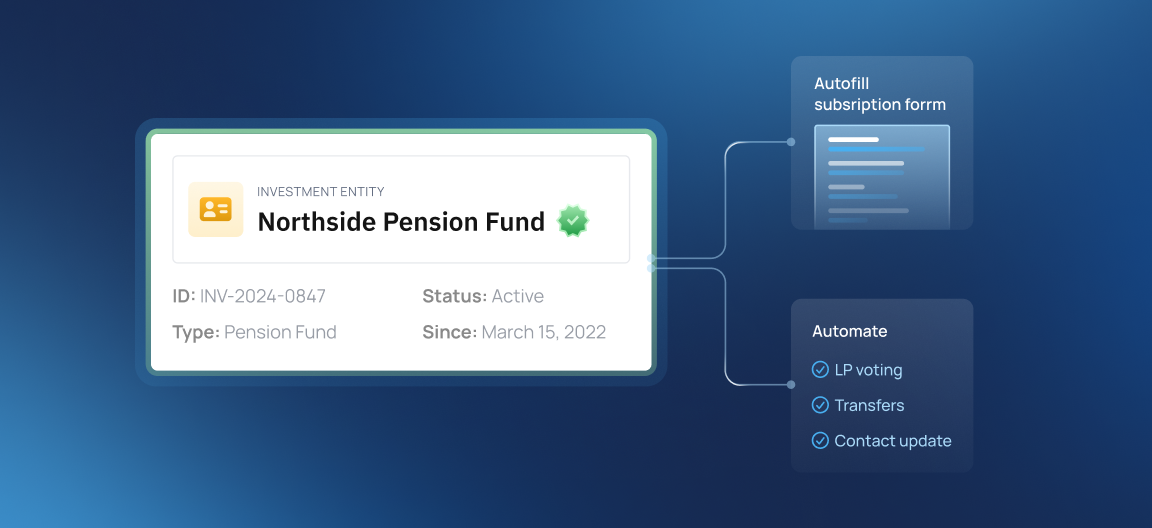
Single Source of Truth: We eliminate the need to ask for the same information twice by pre-filling up to 90% of subscription forms and marking existing documents as "on file" for reuse across all future fund launches.
-
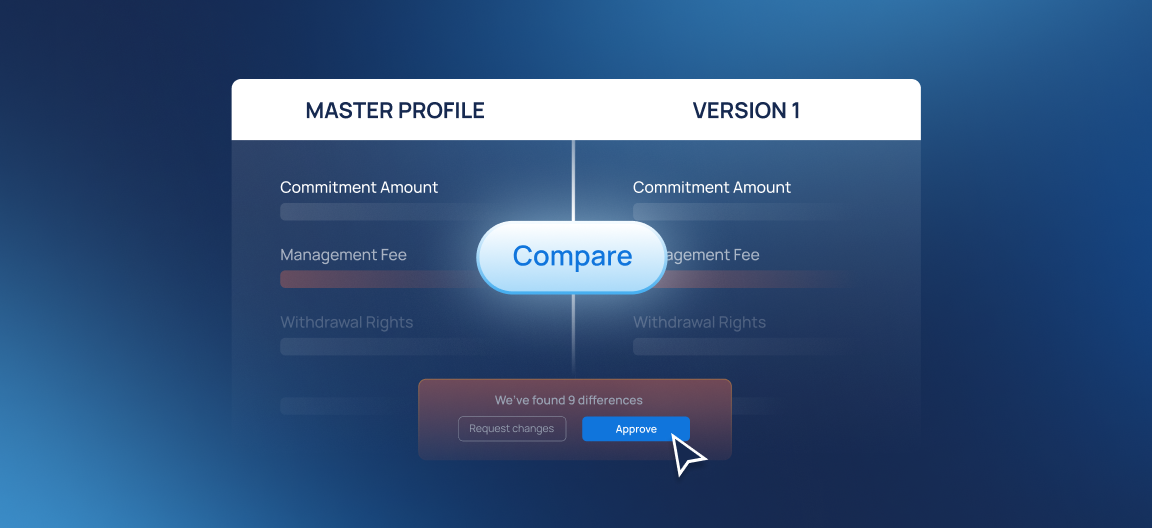
Breeze Through Review: Instead of hours of manual cross-checking, IDM flags and summarizes information changes instantly. Teams can compare master profiles against new submissions in minutes, utilizing in-thread comments to facilitate a smoother, faster exchange for investor clarification directly within the platform.
-
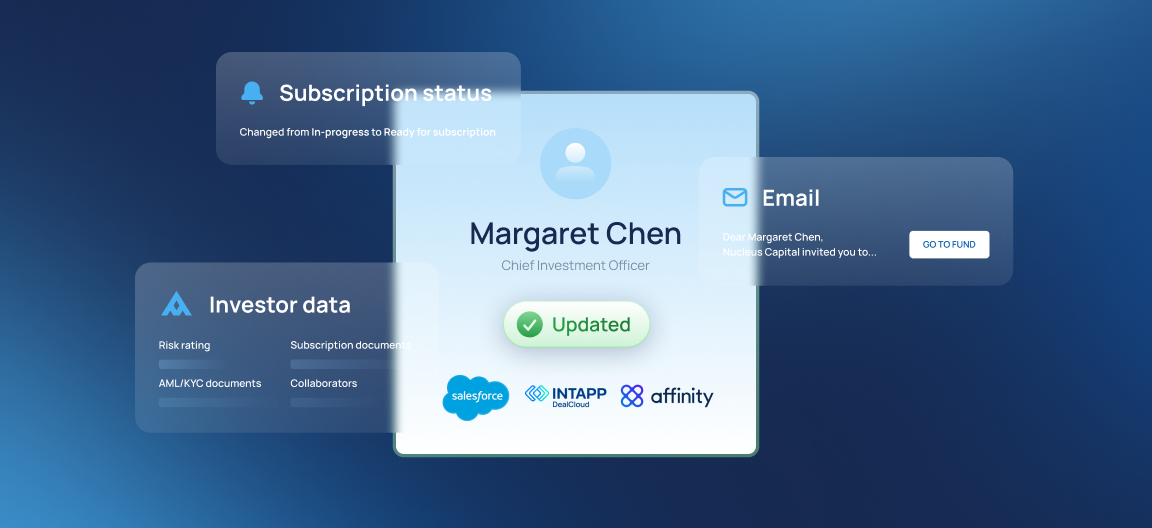
Enrich Your CRM: When subscription data is verified and continuously synchronized, CRM records evolve from static contact lists into a living source of investor intelligence. This ensures IR teams always engage LPs using accurate, current information.
-
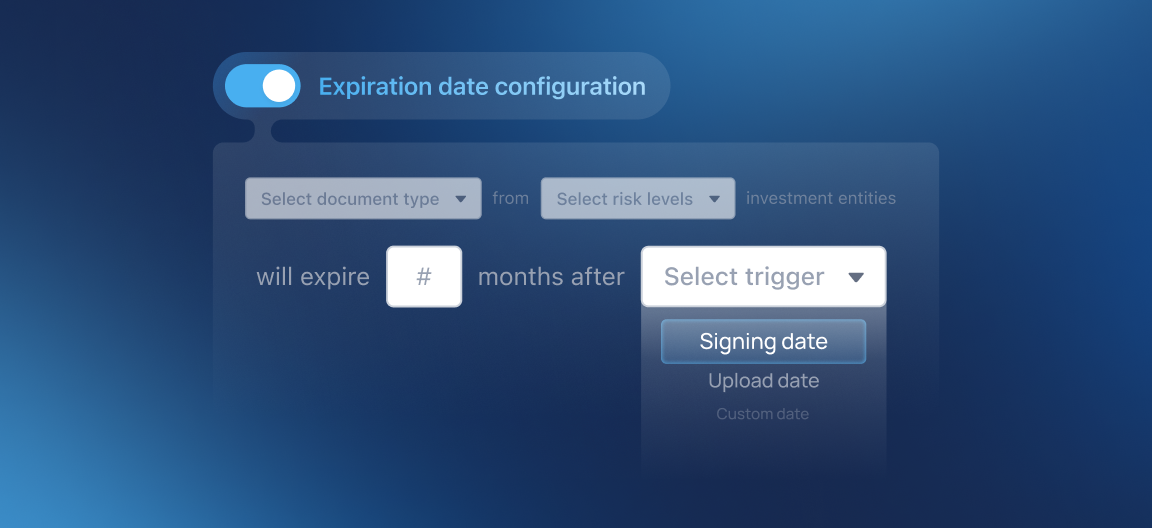
Automated Compliance: Stop chasing investors for expired IDs. The system automatically extracts signing and expiration dates from passports or tax forms, setting intelligent reminder rules to collect updated documents before they become a compliance risk.
By providing cross-team visibility into a single, verified record, we help firms eliminate the "reconciliation loops" that drain productivity. It’s about moving beyond simply "managing data" to accelerating deal flow through reliable data operations.
The Strategic Takeaway
In the coming decade, operational maturity will become a primary differentiator for GPs—a trend highlighted in McKinsey’s 2024 Private Markets Review. LPs are increasingly looking at a firm’s "back office" as a signal of overall quality and risk management. Implementing a dedicated Investor Data Management system establishes a permanent single source of truth, turning fragmented data into a reusable asset. This infrastructure provides the leverage necessary to scale AUM while eliminating the manual friction that stalls growth.



.png)


